
What are Rosenshine's Principles of Instruction?

Bill Hansberry
Co-Director Playberry Laser
Barak Rosenshine, an American educational psychologist, developed Rosenshine’s Principles of Instruction. His principles are based on empirical research and observations of effective teaching practices. These principles aim to provide teachers with a framework for effective instructional strategies. Rosenshine began work in the 1970s and 1980s, conducting studies and synthesising research findings on effective teaching methods. His work culminated in identifying principles that he observed to be present in successful classrooms.
Rosenshine’s Principles of Instruction have gained momentum, prompting us all to consider whether our teaching is compatible with human cognitive architecture. Their common sense and simplicity strike anyone who reads them. Rosenshine’s Principles provide a clear roadmap for improving students’ retention and application of what we teach them.
Rosenshine’s Principles of Instruction reflect fundamental elements that have stood the test of time and are rooted in the foundations of successful teaching practices. For me, Rosenshine’s principles are highly congruent with the methodologies for teaching individuals with dyslexia developed by Samuel Orton and Anna Gillingham in the 1920s. The enduring nature of these effective teaching principles underscores that regardless of educational advancements and evolving methodologies, certain fundamental elements of excellent instruction remain constant.
Over this series of posts, I will lay out each of Roshenshine’s ten principles as outlined in an article Rosenshine wrote for American Educator in the Spring of 2012 and elaborate slightly on each of these, bringing some of my thoughts and insights to them, particularly in how they relate to how many of us in the evidence-informed teaching of literacy space have relearned to teach structured literacy lessons and how this explicit and routine heavy teaching has successfully spilt into other curriculum areas. I want to show how we’ve been adhering to these principles of instruction all along.
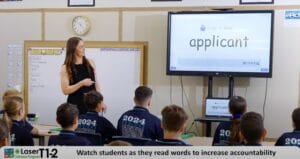
Playberry Laser T1-2 is a teacher-supportive multisensory literacy resource for primary teachers to support their teaching in line with research. We’ve taken the planning and resource design load to free teachers to focus on building content knowledge and sharpening their delivery in line with Rosenshine’s Principles of Instruction.